Understanding the Benefits of Glass Splashbacks for Kitchens: A Guide by Spectrum Art Glass in Sydney
Sydney’s coastal climate is a wonderful backdrop for daily life, but it also brings unique challenges for maintaining a home’s interior, particularly kitchens. Salt air and humidity common to coastal NSW can cause damage to traditional kitchen finishes such as tiles, timber, and grout.
For homeowners wanting a kitchen surface that combines protection, longevity, and style, back-painted splashbacks made from glass offer a highly effective solution. This article explores the science and practical benefits behind glass splashbacks, with a focus on how they withstand coastal environments, answering common safety concerns, and expanding on how they maintain their vibrancy in sun-drenched kitchens.
The Impact of Coastal Humidity and Salt Air on Kitchen Surfaces
Sydney’s position on the coast means that homes are regularly exposed to moisture-rich air containing salt particles carried on sea breezes. This moisture can permeate walls and surfaces inside the home. Traditional tile splashbacks, often used in kitchens, rely on grout and adhesive to hold tiles in place. Unfortunately, grout is porous and susceptible to absorbing moisture, which can lead to fungal growth, crumbling, discolouration, and loss of adhesion.
Timber surfaces behind splashbacks or cabinetry also react poorly to coastal humidity. Wood absorbs moisture, which causes swelling, warping, and potentially rot over time. This is a major concern for kitchens in coastal Sydney where the air remains damp, especially during the cooler months and after rain.
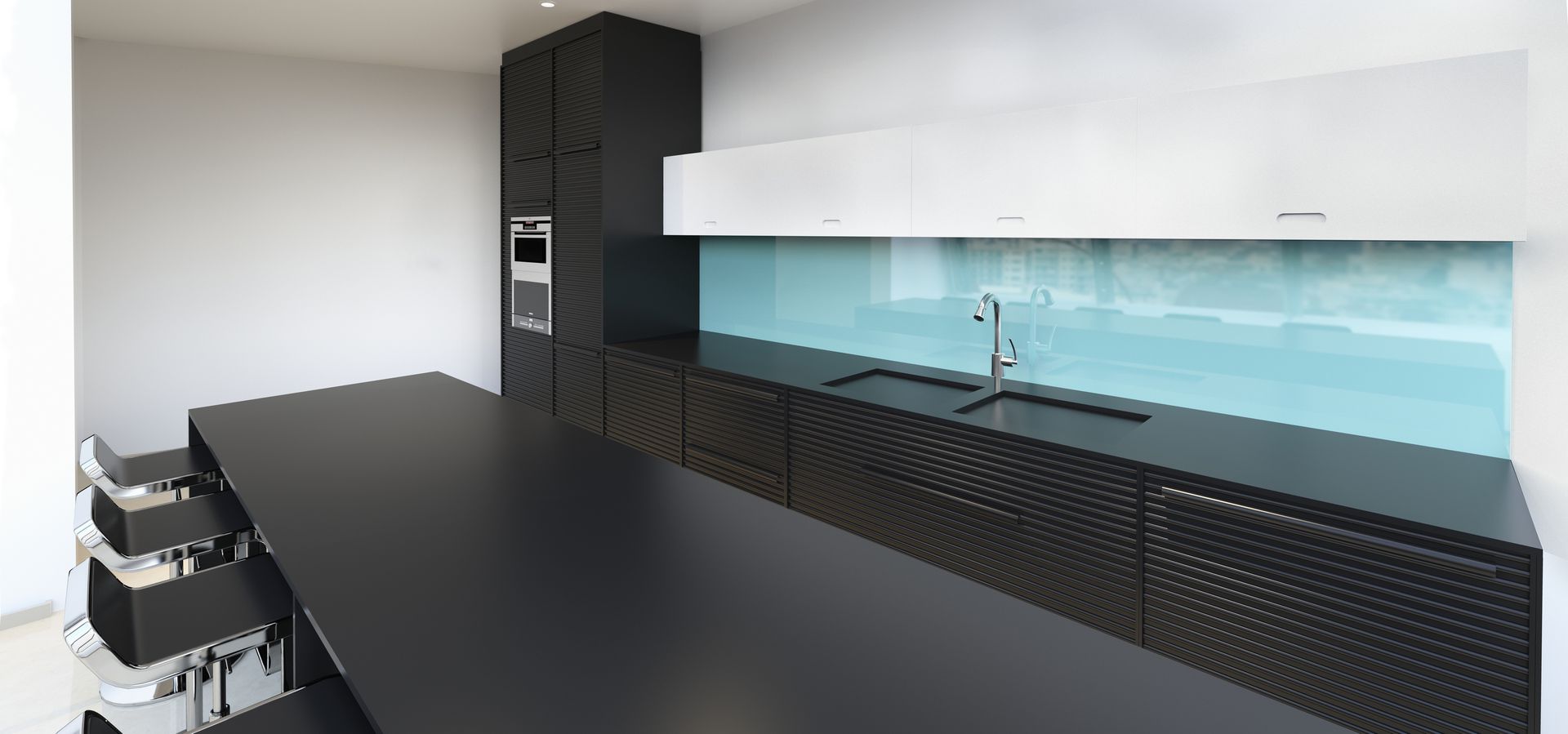
By contrast, custom splashbacks made from glass provide a smooth, sealed surface that stops moisture entirely. Being non-porous, tempered glass does not absorb water or salt, preventing microbial growth and structural weakening caused by damp. When the glass is back-painted, the coloured paint is sealed behind the panel, protecting it from exposure to air and humidity, preventing deterioration and discolouration.
Heat Resistance Behind the Cooktop: Splashbacks and Gas Stoves
Many homeowners question if glass splashbacks are suitable for installation behind gas cooktops. This is a valid concern since gas stoves produce high heat and direct flames. The choice of glass and its treatment directly influences whether this is a safe and durable option.
The glass used for splashbacks in kitchens must be toughened safety glass conforming to Australian Standard AS/NZS 2208. This means the glass undergoes a special heat treatment that increases its strength and resistance to thermal shock, preventing cracking from sudden temperature changes such as those experienced behind a stove.
Due to this toughening process, the glass can safely handle the heat generated by gas or electric stoves while remaining intact. From a safety standpoint, compliance with AS/NZS 2208 ensures the glass will not shatter dangerously and will provide a stable backsplash protecting your kitchen wall from moisture and heat damage.
UV Resistance and Colour Durability
Sydney is known for its bright, often intense sunlight, particularly in kitchens that face north. UV exposure can cause many painted surfaces to fade or yellow over time, reducing the longevity of colours and finishes.
Back-painted splashbacks made from glass address this concern through their construction method: the colour pigments are painted on the reverse side of the glass panel rather than directly on the exposed surface. This means the paint is physically shielded from UV rays, moisture, air, and abrasion, minimising fading or degradation.
This UV protection results in longer-lasting, vibrant colours that remain consistent despite years of exposure to the sun. It’s a significant advantage for kitchens that are often drenched in sunlight where maintaining a fresh, modern look is important.
Installation Considerations: How Glass Splashbacks Achieve a Perfect Fit
The performance and durability of splashbacks depend heavily on precision installation and preparation.
Here are the key aspects for successful application:
- Accurate Measurement and Custom Fabrication: Splashback panels must be cut accurately to fit the exact dimensions of the kitchen wall space, including any cut-outs for power outlets or fixtures. Custom fabrication helps avoid awkward gaps or overlaps that can reduce effectiveness.
- Surface Preparation: Before installation, the wall surface is cleaned and potentially sealed to ensure proper adhesion of the splashback.
- Secure Attachment: Specialists use appropriate adhesives to firmly fix the glass splashback to the wall. Correct application prevents moisture from penetrating between the glass and wall.
- Finishing Touches: Edges are often sealed to prevent water ingress and increase longevity.
Each of these steps contributes to protecting the kitchen walls, maintaining hygiene, and extending the lifespan of the splashback.
Maintenance Benefits of Glass Splashbacks in Coastal Kitchens
Splashbacks that are made from glass require minimal maintenance compared to tiles or timber. Because glass is non-porous, it will not harbour mould, mildew, or bacteria; a significant benefit in humid environments prone to dampness. Cleaning typically involves a simple wipe-down using mild detergent and a soft cloth.
Unlike tiles, there are no grout lines that require scrubbing or risk staining. This helps homeowners keep their kitchens looking pristine despite exposure to coastal moisture and cooking residue.
For coastal homeowners, understanding these technical and environmental advantages helps to make an informed decision when choosing kitchen surfaces. The use of custom glass splashbacks combines aesthetic appeal with practical durability, offering a resilient solution adapted specifically for coastal living challenges.
Reach out to our splashbacks store in Sydney on 02 9737 0666 or visit our contact us page to discuss your splashback needs today.